Hard Lessons: Stan Druckenmiller
E4
•
February 27, 2026
Watch, Listen and Subscribe:

E4 • February 27, 2026
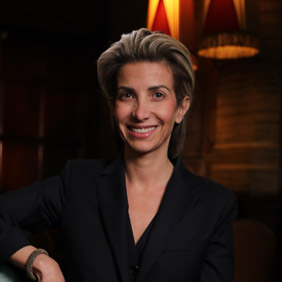
Legendary macro investor Stan Druckenmiller sits down with Iliana Bouzali, Global Head of Derivatives Distribution and Structuring at Morgan Stanley, to reflect on his early career and how he learned to act decisively and change course quickly when the facts on the ground shift. Druckenmiller, who currently manages his own capital at Duquesne Family Office, shares how he would construct a portfolio if he had to start over today, why contrarianism is overrated, and which stock he regrets selling too early.
Stan Druckenmiller: I think contrarianism is overrated. I do like it when I have extreme conviction and no one else believes it. It gives me even more conviction.
Narrator: From Morgan Stanley, this is Hard Lessons… where iconic investors reveal the critical moments that have shaped who they are today.
Narrator: Today on the show—the legendary macro investor Stan Druckenmiller in conversation with Iliana Bouzali, Morgan Stanley's Global Head of Derivatives, Distribution and Structuring. Druckenmiller ran Duquesne Capital Management with roughly 30% annualized returns and no losing years from 1981 to 2010. He now leads the Duquesne Family Office, managing his own capital, and is a philanthropist championing education, medical research, and the fight against poverty.
Iliana Bouzali: Stan, thank you very much for doing this.
Druckenmiller: I'm thrilled to be here. I think the world of Morgan Stanley, so it's the least I can do.
Bouzali: That is, it’s a privilege for us to have you here. I've been privy to some of your equity trades over the past year or so, where it did feel you were early, and I'm curious if you can, maybe, take us through one or two and how they came together.
Druckenmiller: I'll pick one that might surprise you because it's not very sexy and it's not AI or anything, but I think it's a good example of our process at Duquesne. In the middle of last summer and toward the fall, the AI thing started to get, let me say, disturbingly heated and started at least to have some rhyme with what I went through in ‘99, 2000 and we were looking for other areas. The group brought in a company, Teva Pharmaceuticals. So Teva was this apparently, if you didn't know what was going on, a boring generic drug company out of Israel, selling at six times earnings. So, we met with the company—big transition going on. Richard Francis had come in who ran the same playbook at Sandoz. Very impressed with him—knew how to take low-hanging fruit in terms of operating efficiency. But, much more importantly, he was taking them from a generic drug company to a growth company by embracing biosimilars, replacing the generic drugs, which that's why they were six times earnings with biosimilars and even some, some actual drugs. The amazing thing is, the investor base were value investors, so they hated it. So, the stock sat there at six times earnings, while you could see this incredible management initiative going on. And, no one really believed him. And again, growth investors didn't want it because they hadn’t made the transition yet. Value investors didn't want it and were actually selling it because he was doing a growth strategy. So that was about six or seven months ago and the stock was $16. And today it's $32 and not much has happened. Other than he's proved biosimilars, they've come up with a drug that's not a generic. So it's re-rated from six times earnings to, I guess, 11.5 or 12 times earnings. So, it was a whole different set of circumstances but it encapsulates what we look at. If you look at today, you're not going to make any money. If you try and look ahead and what might change and how investors might perceive something ahead. This one happened a little more quicker than I thought, but that would be a recent name.
Bouzali: Fascinating. And very intriguing. I say it's intriguing because I think many people, maybe people not in the market, but certainly many people, when they think of Stan Druckenmiller, they think of a huge macro investor. And I have seen you dabble—more than dabble—really go into areas of the market, especially in equities, that are much more niche, such as healthcare or biotech. And my question is, do you have to be an expert, an analyst, someone that understands the whole pipeline of drugs to get that right?
Druckenmiller: Thank God the answer is an emphatic no. But I've got to have an expert at Duquesne who is, and trust his judgment, and then I've got to have a feel for how the market will embrace the change he's describing. But we did make a big move into biotech. I could sense that there was a potential leadership change just because of the phobia around AI. And, I knew because I've been on the board of Memorial Sloan-Kettering for 30 years, that probably the best use case out there of AI is biotech through drug discovery, diagnostics, monitoring everything. So, biotech had been on its butt for like four years. I also grew up with technical analysis and you could see the momentum changing. So, that was the theory behind biotech. But honestly, when the analysts start talking about genetic sequencing and gene editing and proteins, it's going right over Stan's head. But I get their level of enthusiasm. We have a very good biotech team. That's really important because I trust them, and when they're really enthusiastic, that's as important to me as the actual facts, because I'm not smart enough to understand a lot of the actual facts.
Bouzali: So you filter not just the data, but the people that work for you.
Druckenmiller: Yeah. My advantage is not IQ, it's trigger pulling. I admit it’s some kind of intelligence. But my mother-in-law says I'm an idiot savant. I wasn't in the top 10% of my class. A lot of people think I'm smarter than I am because I'm good at our business. But I have a very narrow form of intelligence that allows me to love and play this game.
Bouzali: I know many people who would love to get inside your head and understand your mental models. You spoke to us about your way of thinking, and I have a really honest, basic question: How much of it can be taught and how much of it is innate?
Druckenmiller: Look, I, I was given a gift. I don't know why I was given the gift, but I have this gift and it's for compounding money. Certainly part of is innate. You either have the skill set for this business or you don't. Having said that, I had a great mentor in Pittsburgh when I started out and I find it very common that great investors have incredible mentors. So to me, it's a necessary condition that you have sort of this innate skill set or gift, but it's almost a necessary condition on top of it that you have a mentor. I'm sure there's some people out there that that's not true of, but for me, it was a combination. I was very lucky to have two mentors. One, I basically learned all the kind of stuff we're talking about. And then Soros. It's funny, when I went there, I thought I would learn what makes the yen and the market go up and move. Immodestly, I learned I knew much more about that than he did. What I learned from him was sizing. It's not whether you're right or wrong, it's how much you make when you're right and how much you lose when you're wrong. And that was a, that was an invaluable lesson. So, you can have something innate, but if you don't have mentors and people to teach you, you're not going to maximize it as much as you do when you do have them.
Bouzali: Should we turn to markets?
Druckenmiller: Do we have to?
Bouzali: Oh, it seems to be almost obligatory with you.
Druckenmiller: Okay.
Bouzali: So, when it comes to markets, it seems to me you treat them less like forecasts and more like systems that kind of reveal themselves. So, let's pretend you don't have a hedge fund, and you come down from Mars and you have to start a portfolio from scratch. How do you anchor it at this moment in time? What do you buy first?
Druckenmiller: That's a hard question. Just a couple principles before I would start. It appears to me the U.S. economy is already strong, and it's going to get much stronger because we're looking at the Big Beautiful Bill, looking at a lot of stimulus. My guess is the Fed is certainly not going to hike and probably going to cut. So that's a backdrop. But against that backdrop, that would be wonderful if we were undervalued. We're not undervalued. We're toward the top of the valuation range, historically. What would be exciting about developing a hedge fund portfolio right now is the one thing I'm sure of—is there's massive disruption and massive change ahead. So actually, for the opportunity to set for the next 3 or 4 years, I'm really excited. Macro has been dead for 10 or 15 years. I don't think that's the case anymore. But if you know anything about me, I tend to change my mind every three weeks. But given the backdrop, we would probably be long, more an eclectic basket of equities. For until the fall of the last three years, our portfolio is very much AI driven. We still have drips and drabs of AI around, but it's not driving the engine anymore to some extent. We still have big positions in Japan and Korea. Some of them are AI. Some of them are not. We're bearish on the US dollar, mainly because sort of the top of the historic range in terms of purchasing power and foreigners are way, way overloaded in dollars. And I don't know whether it's like a sell America trade because it's more like if they don't buy American assets on a net basis because of the trade balance and because of the position, the dollar will go down on its own. And we think that is the most likely course here. And we own copper. It's not a genius trade. It's a big consensus trade. There's no supply coming on, meaningful supply very tight for the next eight years. And obviously you have a big add on from AI and data centers. We're not long on copper equities as much as we are, we just keep rolling the front end. We have some gold. That's mainly a geopolitical trade. It's not so much a monetary trade. And then because we're long all these risk assets I just mentioned, we're short bonds. I don't necessarily expect to make money short bonds. But I think we might make a lot if I'm right on the economy and it's a disinflationary growth, I'd probably break even, and I don't lose anything, but it allows me to hold the other assets I mentioned. If I'm wrong and the strong growth creates inflation—it wouldn't be that unusual if the Fed were to cut into a booming economy for inflation to take off, particularly with what's going on with commodities. So I'm open minded to that. But we create a matrix and the bonds are helpful in both ways.
Bouzali: The equity market has changed a lot over the past decade. And you have all these new types of capital, whether it's multi-strategy hedge funds, retail investors, systematic players, ETFs. How has that changed the time horizon that you feel you have edge versus, let's say, ten years ago? Are you more comfortable with the one-week, the one-month, the one-year trade? Or maybe it's not prescriptive. How do you think about that?
Druckenmiller: Most trades I put on, I think in terms of 18 months to three years, that's how long I think they're probably going to evolve. Not every trade. You know, some are a year, some are five years. But I will admit that I've put on a three-year trade that five days later I'm out of and I've reversed. But, if you're talking about how I conceptualize it, all this noise about how much the system in the market has changed, that has not changed what I just said at all. And, the violence that creates is more useful for entry points if it goes against what my belief over the given time frame is. So, I think it's a lot of noise that makes my life annoying, because I'd rather just have nice, calm markets that move in a direction. But also, it creates opportunities and you have to use the volatility as opposed to being abused by the volatility other than mentally, which I'm going to be. But I mean, you can't let yourself be a victim of volatility and you can take advantage of it. It's just hard mentally.
Bouzali: But you said, I'd rather have trending markets. Fair. Am I wrong in sometimes thinking you're more comfortable being contrarian? Or do you embrace the consensus more? How do you think about that?
Druckenmiller: I think contrarianism is overrated. Soros used to say the crowd's right 80% of the time. You just can't be caught in the other 20% because you can get your head handed to you. I get some intellectual satisfaction out of playing in the 20%, but as a concept, I think contrarianism is overrated. I do like it when I have extreme conviction and no one else believes it. It gives me even more conviction. I don't care if a trade is crowded, if I think the thesis is right and the trend is with me. I mean, for entry points I care, but I don't really care in terms of the investment. It doesn't bother me.
Bouzali: We had an investor zoom call in December 2022, and we were discussing macro, rates, dollar, US versus the rest of the world. And after we spoke a little bit, I asked you what you think on rates. And I will quote essentially verbatim what you said. You said I couldn't care less about rates—the only thing that matters is AI and Nvidia.
Druckenmiller: I don't remember that, but that's nice.
Bouzali: What was going on? How did you see it?
Druckenmiller: So, the Nvidia story is quite interesting and it's a perfect example of the process we spoke about earlier, where I rely on other people. So, I have some young superstars in my firm. And they had a network and they started really talking about AI. This was in early- to mid-‘22, and then I started noticing that the kids at Stanford were shifting from crypto, 50/50 crypto and 50/50 AI to more going to AI. And that's something we've always looked at in venture is where the kids are going. When we bought Palantir in ‘08, ‘09, it was because that was a cool company back then that all the kids wanted to go to. So, my partner had in people from his AI network in there in Palo Alto. They came in and explained AI. Most of it went over my head, but I knew that this was really big.
Bouzali: Why did you feel it was really big? It could have been a fad. You didn't feel this way for other fads.
Druckenmiller: Because I had total trust in my partner, and I thought I was grasping the enormity. It turns out I wasn't grasping the enormity because I didn't know about large language models, but I knew about all the other conventional stuff that was going on in AI. So, I said to my partner, what should I buy? He said Nvidia—that's the way to play AI. So just on this, about as much as you just heard, I bought a not-big position in Nvidia, but enough to get hurt on or to make some money on. And then about two weeks later, ChatGPT happened, which had not mentioned in our conversation. Well, even I understood, okay, the enormity of what that meant when I saw even the rudimentary things it was doing back then. So, then I doubled the position. And then one of the great services you and Morgan Stanley provide are these macro calls and, um, all the macro guys, including myself, luckily I hadn't talked yet, were espousing their views on the world—which are probably worth a nickel and a cup of coffee—and an analyst there who was from the tech world said, ‘You guys are in the trees and you're missing the forest. There's something much bigger than anything you're talking about, even for macro.’ And, he went on to amplify everything I had heard three weeks ago or four weeks ago about AI. But this time I had ChatGPT between that conversation and him. So, then I doubled my position again. And literally, I don't think I knew how to spell Nvidia three months before and when the stock took off, I knew through years of experience, when you have massive, massive change, investors just can't make themselves keep up with it. And it was funny because the person who knew ten times more than anybody at the table and probably 50 times more than me about AI, he sold his Nvidia shortly thereafter. But I knew that this stock would go up for at least 2 or 3 years and go up a lot. And I said publicly in an interview about five months later, as, I cannot possibly see myself selling Nvidia over the next 2 or 3 years because it had already gone from like 150 to 390. And this person couldn't believe I still owned it. And I basically said, not only do I own it, the way these things evolve, this stock can't not go up for at least three years. So then the stock goes to 800 and I violated everything I said in the interview. I couldn't stand success. I'd gone from 150 to 800. I was long term in it. I couldn't deal with it, and I sold it. And then it was 1,400 like five weeks later and I was sick. But, um, it's amazing how little I knew about Nvidia. I couldn't even tell you what the earnings were.
Bouzali: It's a sign of confidence, and it's because you're Stan Druckenmiller that you can be so blatantly honest about the way you think about these things, and I think it's very encouraging to portfolio managers that are coming up in the business, and they often feel like they need to be intellectually, very much on their game constantly. What I'm getting from this, the ability to filter, to manage, instead of being wedded to a spreadsheet is really unique and quite helpful. You said something, that you violated what you had said and sold at 800. Would you have done that 20 years ago? Is this a sign of a more mature way of trading now versus before?
Druckenmiller: Probably not. I'm not used to making six times for my money in an equity in two years, and I'm not Warren Buffett. I think I would have screwed it up 20 years ago when I was good too.
Bouzali: What are some things—if there are some things that you have unlearned over the past 20, 30 years or you had to unlearn?
Druckenmiller: I don't unlearn anything because scars are something I always keep in mind because they can help you out. But I will say through a bunch of circumstances that I won't repeat, I was promoted way too early. I was made an analyst when I was 23, and I was made sort of the head portfolio guy by the time I was 26 and I didn't go to business school, so I never learned all the fundamentals I needed to learn to, in terms of analysis. So, I relied heavily—and my mentor was really into it, and back then nobody was doing it—on technical analysis and I learned all the intricate details of it. Okay. I can unequivocally tell you that technical analysis is about 20% as effective today as it was then, because no one was using it. But when everybody is using it, it doesn't work anymore because you don't have a unique thing to act against. So, it's kind of sad because it's easy and you can be lazy. You don't have to work that hard. You just look at a chart instead of going into a 10Q and all this other stuff. But technical analysis is a problem. In the same vein, price versus heat news was huge for me for 20 or 30 years, and if you had great news and a stock wasn't responding to the news, 90% of the time the news was coming, that was bad. Unfortunately, around 2000, a lot of smart people started coming into our business. I was the only one in my class, I think, from Bowdoin, that went into the financial industry, because we'd been in a bear market for ten years. Well, then again, every wise guy learned what I'm just talking about, so it doesn't work anymore. So back then, the company reported horrible earnings, opened down in the aftermarket and then was up 10% the next day, almost guaranteed to be higher six months later. That's not true anymore because everybody else has learned that. So those would be the two big things. I haven't unlearned them, but I don't rely on them to the extent that I used to.
Bouzali: They've been loved to death, basically. Are there any other signals that have been elevated in importance then, conversely to signals that have been diminished?
Druckenmiller: Not really. There's no silver bullet. And I'm the great beneficiary of 40 years of scars and successes that I can go back on, and a lot of pattern recognition, because there's not much I haven't seen in this business. I'd say the biggest disappointment in my career has been, I think I have more wisdom, and I have more tools of the trade than I had in my 30s and 40s, and I was a much better portfolio manager then because back then I had courage. I would take bigger convicted positions. I'm trying to regain some of my nerve just because it's more fun.
Bouzali: So you're chickening out?
Druckenmiller: Oh for sure. I've been chickening out for a long time. I'm Mr. TACO, except it's not T, it's DACO. Druck Always Chickens Out.
Bouzali: In terms of other maybe experiences that you've had, or a chip on your shoulder? Do you have a chip on your shoulder that makes you better at this?
Druckenmiller: No, no, I just, um, grew up—my dad and my sisters played games with me all the time. I was just a really sore loser. I love games, but I really hate to lose, so I'm just very driven. It's a sickness. I don't know where it comes from, but I might as well channel it and make it productive instead of just a disease because it is a little bit unseemly. But it's who I am.
Bouzali: Embrace it. Finally, this show is called Hard Lessons. Can you look back in your life or career and maybe take us through something that you had to learn the hard way?
Druckenmiller: Let me just say, I have so many scars. You can't believe it. Everyone knows how I played the Nasdaq melt up in ‘99. Sold it perfectly in January and then bought the exact top. And someone says, what did you learn from that? I said nothing, I learned not to do that 20 years before, but I got emotional, which I fight every day. I would literally like throw up like once or twice a week, just from anxiety when I'd have a drawdown and so forth. And at some point in my career, I learned that you're going to continue to make mistakes, you're going to continue to get emotional, you're going to continue to have that happen from now and then. But you've got a gift. And just stop torturing yourself for like 48 hours or maybe longer over this because you've been doing this long enough and the record is there long enough that it's no longer like random accident, which I did not believe for like 15 years. So, the hard lessons have been like hundreds of mistakes, but that they're just a moment in time. And when you have these drawdowns and if there's money managers listening to this and you're good, it's easier said than done. Just get over it and move on.
Bouzali:So Stan Druckenmiller had imposter syndrome for 15 years?
Druckenmiller: Yes. Maybe longer.
Bouzali: Wow.
Druckenmiller: Maybe longer.
Bouzali: Incredible. As we're finishing. I want to say thank you for being here. I got to know you later in your career, and it's just been fascinating to see you think and trade—to see you in action. You've been very generous with your time, and on behalf of Morgan Stanley, thank you very much.
Druckenmiller: As I said in the beginning, I wouldn't do this for many. And I think the world of Morgan Stanley, so it was delightful to be here.
Bouzali: Thank you. Stan.
Druckenmiller: Thanks, Iliana.
Narrator: You’ve been watching Hard Lessons, an original series from Morgan Stanley. For bonus content from Stan Druckenmiller and to listen to the extended audio version of this podcast, visit MorganStanley.com/HardLessons.
In these bonus cuts, Stan Druckenmiller shares his quick takes on AI, asset bubbles, crypto, humanoids, China, the yield curve and the future of the dollar.
Jon Gray
I remember going to see investors and distinctly one of our state pension funds in the meeting, telling them about one of the writedowns. And I just remember that awful feeling leaving that meeting, going back to the airport and being like, wow, I cannot let this person down. This is not good.
Narrator
From Morgan Stanley. This is hard lessons where iconic investors reveal the critical moments that have shaped who they are today. You'll hear about two out of consensus calls, one that was on the money and one that wasn't.
Narrator
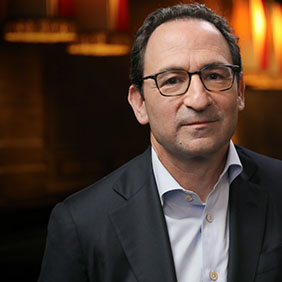
Today on the show. Jon Gray, president and chief operating officer of Blackstone with Dan Simkowitz, co-president of Morgan Stanley. Jon stepped into his current role in 2018, and since then, Blackstone's assets under management have more than doubled to over $1.2 trillion.
Dan Simkowitz
Well, it's so, so good to have you here. It's fantastic. You know, I'd say 30 years ago our industry was so private, frankly so small. So, I think it's a little inspiring what you're doing around marketing for financial services. But you know, when we led the Blackstone IPO you were $88 Billion of AUM. Now you're over $1 Trillion. The organization is bigger and more complex.
You've built both a world class client service organization, but at the core of it is just incredible investment, discipline and performance. And so John, we're going to talk about two out of consensus investment decisions. Set the scene for one of the winners.
Jon Gray
Always better to talk about the winners, although you learn more from the losers. Right around 2007 we bought Hilton Hotels. I led that investment. It was a $26 billion investment, and I was, um, excited because this was a obviously iconic company that owned some incredible real estate like the Waldorf, had a timeshare business and then had this unbelievable management franchise business Hilton and Hampton Inn and DoubleTree, Conrad, Hilton Gardens, all of that.
And it was at a time when the market was pretty frothy because it was before the financial crisis. You remember people were borrowing a lot to buy homes. They were borrowing a lot in leveraged lending in the corporate world. They were borrowing a lot in commercial real estate. Prices were elevated, and I thought we had found something in operating business with some real estate inside that we could buy at a reasonable price.
Now, we paid a big premium 40% over the stock market at the time, and we bought the business $26 billion. We borrowed $20 billion. It was a different era.
Dan Simkowitz
How did that feel?
Jon Gray
Well, at the time, there was so much leverage in the system.
Dan Simkowitz
It was– you’d never borrow $20 billion before?
Jon Gray
No. Well, except that we had bought EOP. We had bought the largest office business, and that was a $39 billion deal, and we had been on this run buying public companies, because at the time I was running real estate and we were able to buy the businesses on the screen much more cheaply than we could be when we were bidding for individual properties.
And so we started scaling way up. But in this case, we took on a business with some volatility hotels and put a lot of leverage on it. And we took money from our private equity business and our real estate private equity business, $5.6 billion of equity, the largest investment we'd ever made at the time as a firm.
And we bet on this. And we closed the deal in the fall of ‘07. Terrible timing. And by all accounts, I should not be sitting here with you, Dan. They should have carried me out. And it looked that way. Because if you recall, the financial markets really tighten up and the real economy goes down. And this business, Hilton loses 20% of its revenue and 40% of its cash flow.
And we've leveraged it up a bunch. We write down the investment by 71%.
Dan Simkowitz
So you actually took the action to write it down.
Jon Gray
We took the action to write it down because it was clearly very impaired. And I remember going to see investors, and I remember distinctly one of our state pension funds in the meeting, telling them about one of the write downs. And the investor was almost physically ill, which is understandable, because he had a very large investment with us.
And I just remember that awful feeling leaving that meeting, going back to the airport and being like, wow, I cannot let this person down. This is not good. And I think fortunately, maybe because of my core optimism, but also my belief in the underlying business, I didn't lose faith. We also had an amazing management team led by Chris Nassetta, who's still the CEO of Hilton.
I'm still the chairman. 18 years later, it's pretty amazing.
Dan Simkowitz
That's a rarity.
Jon Gray
A rarity, yes.
Jon Gray
We got through this now. How did we do it? We ended up putting in an extra $800 million to help deleverage the company and get some additional term on the debt. The management team did an amazing job. They kept growing the business, particularly outside the United States. And then ultimately the world started coming back.
People started traveling again. The business was performing. We went public. A few years later, you guys were involved in that as well. We ended up, you know, splitting into three companies a timeshare business and owned real estate business and a management franchise business. We sold some individual assets, and then we sold our stock, and we ended up making $14 billion, the most profitable real estate private equity deal of all time.
And the movie should not have been written. It should have looked completely different. And so it makes you think a lot. What are my takeaways as an investor? And and I would say the biggest ones are one. You got to stay calm.
Dan Simkowitz
Stay positive. You never give up.
Jon Gray
That's what I say every Monday on on our TV. It's what I say to my daughters. But the most important thing on Hilton was that what I learned as an investor was maybe I spend too much time thinking about whether I should pay $99 or $101 and so forth, and maybe what matters more is sort of the neighborhood I'm investing in.
The underlying tailwinds, in this case, global travel, the quality of the business, in that case, a capital lite, fast growing franchise management business, as well as the quality of the management team. And if you can get those things right, even if you made a really poorly timed investment and paid a big premium, it can still turn out okay.
And so when I think about today is we're investing into digital and energy infrastructure, or in India or in life sciences or areas where we have really high conviction. That to me comes from this experience, which was why did this turn out? Well, it should not have turned out well. And so, the lesson of let's try to find the right neighborhoods to deploy capital that has really stuck with me.
Dan Simkowitz
It's interesting because we're such great partners, our two firms, partly because in the last 15 years we got intensely dedicated on just helping clients allocate capital, but we needed to be bigger and a little different. So we bought Smith Barney, bought E-Trade, bought Eaton Vance, you know, all these these acquisitions, but they're all around a neighborhood we loved.
Dan Simkowitz
Having a partner. So in your case, you had Chris, but presuming you also had your own team, you know, how important is that? Especially when it's really dark. How important was that.
Jon Gray
On a deal like Hilton? Super important. I would say having business colleagues who still believe in you. First of all, you guys have done an amazing job because also you've got a great culture and you have all these capabilities, both serving individual investors and obviously as an investment in commercial bank providing capital and and that ability to show up as a partner, even in the bad times, having people who still say, yeah, we've got to find the way out through this thicket, that's really important.
And I would add a personal element to this. Having a wife and children and people you can go home to who still believe in you, even when the world doesn't, that matters.
And I'll just give you a sense of how dark it felt. Um, in early oh nine, the company had an employee who had taken some documents from a competitor the company had found out sent him back. Nevertheless, there was a federal investigation. There was a big article in the Wall Street Journal, and I was talking with Chris Nassetta, and I called him and it was March
Yeah, it was probably March of ‘09. We'd written the investment way down. We had this investigation in the headlines, and I said, Chris, the good news is it cannot possibly get any worse. But the fact that I had him, I had my family, I had colleagues, and ultimately that this was a terrific business, that what we faced was cyclical, not secular in nature. That made a huge difference.
Dan Simkowitz
So now it's one of the greatest private equity deals of all time. But in the darkest days, it was hard. What's the one big, hard lesson coming out of Hilton?
Jon Gray
Well, I think the hard lesson was…
You don't want to put that much leverage, even on a great business, because the key is you've got to be able to get to the other side. When you own a great business, great piece of real estate or infrastructure, ultimately it will It'll compound or grow. And the problem is people get stopped out. In the trading world, it's margin debt.
It could be leveraged lending in corporate world or real estate debt. And if you have too much put so much pressure, you may be forced to sell dilute your ownership at exactly the wrong moment. So the good lesson was focus on great businesses, great neighborhoods and stay calm. But the hard lesson is don't put yourself in such a precarious position that if the weather outside gets tough, you're at risk of losing things.
Dan Simkowitz
So this one worked out perfectly in the end. Yes, EOP worked out great. These are oh seven vintage deals right before the crash. Give us one that didn't work out so well.
Jon Gray
One of the toughest lessons for me happened in the late 90s during the dot com boom. I joined Blackstone in ‘92. I did M&A in private equity for a year, a year and a half, and then I went into real estate after a crash and basically for, I don't know, 6 or 7 years. I'm in real estate. Things just keep going up and up because you were you had bought things very cheaply.
Interest rates were reasonable. There wasn't too much building. And when you buy everything and it goes up, it doesn't really train you to be a great investor, right? It's the experience. It's these hard lessons that make all the difference. And sort of the top of that was in the late ‘90s. I was really focused on Northern California because you were seeing the innovation.
We were moving on to the internet and so forth. And what happened was I bought a building on North First Street in San Jose, a nondescript two story, and these were really crummy assets. They were crossed between office buildings and warehouses. They weren't worth very much physically, and we paid a big price for them because they had a tenant paying a huge rent, and instead of buying it at a 7 or 8% yield, I was buying it at 11 or 12%.
I thought this was amazing. What I failed to notice was the major tenant was Gobosh.com
Dan Simkowitz
What’s Gobosh.com?
Jon Gray
Gobosh means go big or stay home.
Dan Simkowitz
Oh God.
Jon Gray
I'm sure that you know, this company of unfortunately didn't last very long. I should have stayed home because by March of 2000, you know, the dotcom bubble blows and this tenant disappears. And I should have recognized we were paying well over physical replacement costs. The quality here was poor, and the tenant didn't have much in the way of revenue.
It had very few people in the space, and in my enthusiasm of what had come before it, I sort of lost sight of that. Now we ended up getting a letter of credit. I think we got about a third of our money back, but it was really the first time I experienced financial loss in an investment. And I don't know, we lost $20 or $25 million, but it was embarrassing to tell your investors, to tell your colleagues and to look at it after the fact.
It was like, oh my gosh, how stupid could I be? Why would I pay that price for this? And there. It's a little bit of the danger of the mania of crowds, right where things were going so great that in that moment in time, we became disconnected from fundamental value.
Dan Simkowitz
And did someone come to you in that instance because you're not as senior as you were in oh seven and say, you know, John, these are the lessons that have to happen and hang in there, or did you have to learn that yourself?
Jon Gray
I think that we all sort of talked about it. It was pretty clear after the.com bubble burst, it was pretty clear to look back and say, gosh, when companies are trading at hundreds of times revenue, they're not making any money. The business model isn't viable. This was way too speculative. And what's interesting is I know today there's a lot of are we in the same kind of environment?
The only thing I would say is it feels very different to me. I mean, back then, as you know, Cisco, I think was the biggest company they traded at 130 times earnings. Nvidia, the biggest company today I think is less than 30 times earnings. And so I don't think we're that kind of time. Now, if this runs for five more years and people think trees grow to the skies, that's always a risk.
But I think as an investor, again, when you go through those experiences, it reminds you to question yourself that the danger is sort of the winning hand thing, that you keep doubling down, you keep doubling down because it's working. But at some point the prices move too far, the assumptions move too far, and just because something's worked for a long period of time doesn't mean that's going to continue.
Dan Simkowitz
Blackstone probably has great people joining all the time, but if they've joined since 2010, yeah, away from the Covid period, which is, you know, pretty V-shaped, they may not have experienced the same challenge that you did. How important is it to go through one of these drawdowns or real hard lessons?
Jon Gray
I think you learn so much more because when you have success, what it teaches you your genius, right? Like you buy something, it goes up, it doubles in value. Look how smart. You don't even think about it. It's when something goes wrong that you sit down and say, why did that happen? Like, what did I lose sight of in fundamental value?
What did I miss about this business? Shouldn't I have known that? And you tend to really dwell on it and it makes you better. And then you begin to have pattern recognition. You begin. Then as you get more senior to say, oh, I've seen this before. And so the danger, of course, is when people get burned. Sometimes they have a hard time going back.
Right. And so they bought an asset at 100. It now trades at 40. And they're like oh no no I'm still scared. But you're like wait, wait. The risk is much lower. And as you know, the psychology is people are more enthusiastic investing as the prices go up as people perceive risk is lower. And one of the good things I think about the current environment is there's so much negativity.
Everybody there's a bubble and private credit. There's a bubble in AI, there's a bubble in the stock market. In some ways, that sort of caution that lingers over everything is helpful to stop things from getting out of hand.
Dan Simkowitz
John, these are incredible investment perspectives. But if you think about your career, your adult life, what's the hardest situation or lesson that you've faced?
Jon Gray
Well, I would say certainly in my career was what happened this summer. We lost an amazing colleague in Wesley LePatner. We had a horrific shooting at our building. Um, random act of violence. And, um, you know, to lose somebody who was an amazing professional, but an even better human being, mother, wife, daughter, great mentor to so many of our people.
And then, you know, to have your people go through the trauma of one of these mass shootings, that was really hard because there's not really a playbook. It's not like an investment thing. Oh, here's what we're going to do. And the only thing you could do is sort of express your humanity. Try to give people support, mental health support.
Do all sorts of things bringing people together and then honor Wesley's legacy, which I think is really important. So for me, that was that was the toughest moment, I would say, certainly in my career, because it went well beyond financial into the human. And, um, hopefully you never endure anything like that again.
Dan Simkowitz
It's very tough.
Jon Gray
But the really important thing, again, is to connect with people. And the the thing about our firm, I felt has always been special. It's always run like a small business. And we can emphasize over and over again the importance of delivering for our clients the performance that we operate with integrity.
But if you think about an investment organization or financial services company at its core as a culture of the place, and that's what we're desperately trying to hold on to.
Dan Simkowitz
Jon, that was incredible. Amazing lessons. Thank you for the partnership. We really appreciate it. It was fun.
Jon Gray
Dan, it was great. Thank you, thank you. Morgan Stanley great partnership as well. Thank you.
Narrator
You've been watching Hard Lessons, an original series from Morgan Stanley. You can listen to an extended audio version of this episode on Apple, Spotify, or wherever you get your podcasts. For more information about the series, visit Morgan Stanley dot com slash Hard Lessons.
It was a big, big negative event.
Jean Hynes
There was so much value created. When a drug works and when it doesn't work, there's a lot of value destroyed. Sure.
Narrator
For Morgan Stanley, this is hard lessons where iconic investors reveal the critical moments that have shaped who they are today. You'll hear about two out of consensus calls, one that was on the money and one that wasn't.
Narrator
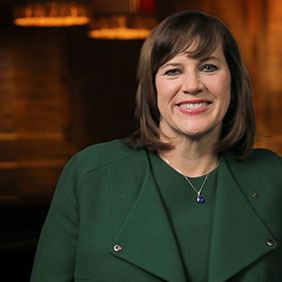
Today on the show, Jean Hynes, CEO of Wellington Management with Amy Ellis, global head of senior relationship management at Morgan Stanley. Jean became CEO in 2021 after spending her whole career at Wellington, where she was a portfolio manager, an industry analyst in healthcare and biotech. Her deep and thoughtful approach to research continues to inform her strategy today.
Amy Ellis
Jean, thank you so much.
Jean Hynes
I'm so happy to be here, Amy.
Amy Ellis
You've seen so much. You've accomplished so much. We've all had moments in our career. We've had to make decisions, and we didn't know how they were going to turn out. Here on Hard Lessons, we're here to explore those with you. Can you set the stage now for us on a bet that you made and how it worked out for you?
Jean Hynes
There was a company called Schering-Plough, a pharmaceutical company. It's probably most well known for the drug Claritin. Sure. Which is a staple in everyone's life. It's now over-the-counter. Claritin was coming off patent in 2002, and they also had this new what I thought was an exciting cholesterol agent that was in development.
Okay, so I had this company that I had not owned, I knew Claritin was coming off patent and that the new drug was also going to be launched. And so that's where it gets a little tricky because you have you have very high margin drug going off patent, and then you have a new drug that you have to launch and invest in, and then you have uncertainty about the trajectory.
Amy Ellis
What gave you this confidence? What gave you this fortitude? That this was the inflection point. This was the time to get involved.
Jean Hynes
People probably know statins. There are millions and millions of people on statins. And statins are an amazing medicine. But at the same time, there were lots of data that showed getting cholesterol even lower than these medicines could do. It was very important. And then Schering-Plough had a drug that was a brand new mechanism.
So the bet was that it would be complementary to the statins. It wasn't going to replace the statins.
Amy Ellis
Okay. So how out of consensus were you?
Jean Hynes
So I think I was out of consensus at many points at the time. Okay. But I think the big call was that it was going to be a successful drug in its profits. It would replace the profits of Claritin. Wow. I think over that decade that actually turned out to be true.
Amy Ellis
And you got it right.
Jean Hynes
And I got it right over the long term. Like Schering-Plough probably was one of the best pharmaceutical investments in that decade. But it was. There was a lot of ups and downs in between.
Amy Ellis
Were there moments you thought you misstepped? You thought you got it wrong?
Jean Hynes
This is the science and art of investing. In 2002, a Claritin patent went off. And what happened in the years prior is that you began to have consolidation in the retail drugstore chains, moving from this independent pharmacies to CVS and Walgreens. Like much more consolidated retail chain, you also had the emergence of pharmacy benefit managers.
And so by the time Claritin went off patent and the retail drugstores and the PBMs were all incentivized to switch as fast as possible, you went from a scenario where drugs lost their patent and lost their sales over five years, to losing their sales over one year. I think it surprised me. It surprised the pharmaceutical companies.
It surprised everyone in the market.
Amy Ellis
Ton of new learning.
Jean Hynes
A ton of new learnings during that time. And so what that meant was it wasn't going to be a perfect line of clarity going off and going up. And and then the question was, how does a company that's losing a 99% gross margin drug, um, still invest in this new launch? And that's where my earnings estimates were too, too high because we were all learning at the time.
The company was trying to not lower its earnings estimates. And so they were they were doing things that probably didn't benefit the launch of the idea because they were trying to, um, smooth it and reduce profits. They were also launching Claritin over the counter. I'll tell you a funny story is my husband comes home and he brings home, um, private label Claritin.
And I was like, you can't do that. You need to buy the branded. But it was a sign that actually branded Claritin was priced too high. Yeah, because they were trying to price it to save their profits.
Amy Ellis
During that journey. What other things did you realize about long term holdings of big companies?
Jean Hynes
So I think what held me in the stock was the fact that they did change management. So we had a new CEO come in. His name is Fred Hassan. I had a lot of admiration for him, but my biggest lesson was that in 2003, when he came in, I should have known that he would have wanted to invest. And in order to invest. What he did is cut the dividend.
Yeah. And he and he lowered the earnings so that he could invest. Now I am on maternity leave. By the way, when this happened with my fourth child, who is at that point, I'm like 5 or 6 weeks old, and you do not want to have a stock that has a dividend cut.
Amy Ellis
While on maternity leave.
Jean Hynes
And it's one of the biggest holdings of the firm. Yes. And so it was the right thing to do from a management perspective. Like he created more value by making those very hard decisions. So for me, the heart, like the lesson learned, is I should have known this. Like I should have known that he was going to do something dramatic to create the long term value.
Amy Ellis
So you said that always stayed with you, so you've never missed that sense.
Jean Hynes
I've never had another stock that had a dividend.
Amy Ellis
Love it. I love it.
Amy Ellis
So Jean, can you tell us how Schering-Plough journey ended?
Jean Hynes
Yeah. So in March 2009, Merck and Schering-Plough agreed to merge. It was a partly cash and partly stock transaction. It was a big transaction. So interestingly, Merck bought Schering-Plough and actually Pfizer bought Wyeth. I own both Schering-Plough and Wyeth. The interesting thing was that so I hold these stocks, I hold Schering-Plough and of course there was a pop like that was good.
But then the price of Merck went down so much, and actually the price of Pfizer went down so much. I thought the acquisitions were actually quite good for Merck and for Pfizer. And so what I had to do is something I had never done before, is take a step back and say, if if people begin to realize that these are actually really opportune and good value acquisitions for these companies, those stocks are going to go up and I will never get the full value of the value creation of Schering-Plough. And so what I did within the month or two is recommend that we sell all of our Schering-Plough and buy Merck instead. And so in the end it was actually the stock part of it too. I had to get right because I could have done all the analysis right. But if I hadn't done that move, which I had never had to even think about before.
Yeah. But because they were such large acquisitions and some of it was in stock, I had to figure out like what was the right thing to do to actually make sure I created all the value for our clients.
Amy Ellis
And looking back, I mean, you have to think that was such a good move.
Jean Hynes
This was a great acquisition for Merck. Yeah. Yeah. And what came out of that was not only that, that Zetia in the cholesterol franchise became a good franchise, but ensuring class pipeline ended up being Keytruda, which is now the largest drug in the world. It really changed Merck's future. I always like to say whenever something works, you actually can celebrate for just a short period of time.
You go, yay for like literally a day, and then you have to actually decide what to do.
Amy Ellis
Okay, so let's let's shift here a little bit and talk about an out of consensus call that didn't go so well. Yeah.
Jean Hynes
So giving you a little bit of history. Elan was a drug delivery company based in Ireland. We did not own it, by the way. We had a very negative view of Elan during the 1990s. They had a very high earnings growth, but in my view it was very low quality earnings growth. Got it. But then in the late 1990s they bought a company called Athena Neurosciences.
Now we were the largest shareholder of Athena Neurosciences. We knew that company. They were developing drugs for multiple sclerosis and for Alzheimer's. They were based in South San Francisco. It was a very odd acquisition that this sort of lowest quality drug delivery company would buy the South San Francisco.
Very exciting. Hi. Science company. Okay. And so we had a very positive attitude towards Athena, but all the issues about earnings quality were still happening with Elan. Okay, I was right. Like the earnings quality was really really quite low. Yeah. But then at the same time the pipeline of Athena was beginning to merge.
And so we began to buy a lot for really for the pipeline of Athena Neurosciences that at some point people would realize what they had and you'd have this massive uplift of quality and excitement about the future. There's two parts of Elan that were difficult. One was that last bit of low earnings quality came out after we bought it.
Okay. And this is another lesson. So when you have a profit and loss statement, you have revenues and you have a cost of goods and you can't really hide those unless it's fraud. But you also have this other revenue line. Okay. And my lesson is that I didn't dig in deep enough to that.
Amy Ellis
Interesting.
Jean Hynes
Line. Interesting. So there ended up being things that were non-recurring. And so it wasn't real earnings. The lesson for me is you know and and I say this to all our young analysts like you need to understand every line of the PNL. Yes, every single line. And you can't just put a plug in. You have to really dig.
So that was another thing. I'm never going to let that happen. Okay.
Amy Ellis
That's fair.
Amy Ellis
All right. So that was the first line. That was the first line.
Jean Hynes
And then and then the excitement happened. Yeah Amy the excitement happens. They bring this drug for multiple sclerosis to the market in the first generation of multiple sclerosis drugs. They took patients out of wheelchairs. Doctors would say in the early 2000, I don't have people in wheelchairs anymore.
But at the same time, they were drugs that were difficult to take. From a tolerability perspective, the way the drugs work, they cause people once a week to feel like they had the flu. So they were amazing. Inventions and innovations and not optimal. So we were looking for what was going to be the second generation of multiple sclerosis drugs.
And how was it? And and if you did the research, this mechanism really reduced the inflammation that was going into the brain. Patients felt great and the drug was approved. And then it was taking off like faster than almost any drug. It was like, wow, this is going to be such an.
Amy Ellis
We got it.
Jean Hynes
Right. And I was underestimating the launch. Wow. That's how that's how positive it was. So this is February then of 2004, and I am in Japan, and I remember being out to dinner with a Japanese company coming back to my hotel room and the red light blinking. So I listened to the message on the hotel phone.
And it's my trader back in Boston saying, Tysabri has been pulled from the market, and I'm sitting there in my hotel room saying, what? Like, how could it possibly be pulled from the market? I mean, the reason Tysabri was pulled from the market, it was so good at reducing inflammation to the brain, it was almost too good.
There was a very low incidence that a lot of very, very rare virus to start in very few patients. But the outcome was death. And so like you can't accept unacceptable. And so I'm like across the world in a hotel room up half the night, I had to leave a message for the portfolio managers on voicemail like I wasn't at a computer.
You didn't have blackberries, you didn't have iPhones. So I'll tell you the next day the stock is down 90%. I come out to the car and my and my great colleague said to me, he's like, Jean, There's nothing you can do today. And we're here in Japan to do a job for our clients. And we need to focus on the job at hand.
And there was nothing you could do. The stock was down 90%. So it wasn't as if, like, you were going to save a lot of money by selling it. Like you can get to it next week. So I want to tell you how difficult this was. I have a wonderful colleague who loves facts. And he said, Jean, do you know that this is the first company with a market cap over 10 billion to go down 90%?
Jean Hynes
It was a big, big negative event.
Jean Hynes
I ended up doing a lot of work in the ensuing months. I didn't sell my position. I just kept it and I did work. Alon ultimately got acquired by another company. It wasn't a great holding. Yeah, yeah, it did recover from that 90% because we ended up coming back on the market. And it really did teach a lot about science.
It really told you you can do better for multiple sclerosis patients. But now, 20 years later, there are really good drugs for multiple sclerosis that balance that safety and and efficacy and tolerability.
Amy Ellis
Interesting.
Jean Hynes
These are high risk. That's the beauty of biotech and pharmaceuticals. It's not good enough to just understand the science and what's going to happen. You have to understand the financial implications when you're really researching science and you're on the cutting edge of science, it doesn't always go how you want.
And so there is so much value created when a drug works and when it doesn't work, there's a lot of value destroyed.
Amy Ellis
Sure.
Amy Ellis
So what did you learn when Elan opened up down 90%?
Jean Hynes
I think the lesson for me is you need to make sure that you are you're taking in all the potential risks in an area of medicine where it's cutting edge. And you can't always know everything. And then how do you react?
Amy Ellis
And at that moment, you decided to hold that moment.
Jean Hynes
I decided to hold and do research and wait and see, like, would the drug come back on the market? I could have just stopped and said, I'm not going to do this. There's probably an opportunity cost for that research to an opportunity cost for holding, or it could have been in another stock. But the decision I made was to hold and and we did recapture some of the value.
But those are the decisions you have to make every day.
Amy Ellis
You went back to your trusted process.
Jean Hynes
When you do this deep research, and then you have an insight about how the future of medicine is going to change in a way, and then it could still be another five years till it gets to the market. It's it's when do I have enough dots connected? If I waited for everything to come out in phase three trials, we would've never made any money for our clients.
Amy Ellis
We sat together four years ago as you were ascending into the CEO space. What have you learned? What are the hard lessons of being a leader?
Jean Hynes
I became a managing partner in 2014, and in my first year I started working with a coach, and one of the things she asked me early in our coaching was like, do you want to be CEO someday? And I like, literally said no. Like it hadn't even crossed my mind, actually. And the reason for that, I think, was there aren't that many role models, right?
There aren't that many role models. I had this image of CEOs and that was not me. Visionary, super creative. Aggressive. Um, that's not who I was. But when I took a step back, actually, the CEOs that created the most value in that I admired the most also didn't have those characteristics.
Amy Ellis
Interesting.
Jean Hynes
They were really this combination of optimists, strategists, um, humble, authentic. Those were sort of the characteristics of the of the CEOs that I admired the most.
Amy Ellis
So how long did it take you to think about, hey, I could do this.
Jean Hynes
It took about a year before the inkling came in. Okay. It was a big decision to make. Two. Yes. Um, was I the right person? And if I was the right person, what did I want to do? Like, how did I want to spend the last decade of my wonderful career at Wellington. Is this how I wanted to spend my time?
Amy Ellis
Five years in. What are you most proud of and and what itches at you still?
Jean Hynes
The asset management industry is going through a lot of change. So one of the things that I can recognize is that I've seen the biotech and pharmaceutical industry be stable and be unstable, and I feel like the asset management industry is going through one of those changes. Sure. I think what I'm most proud of is shifting.
Of course, we're going to have to pivot, but changing the mindset of 3000 people that, um, you know, we can pivot. Yes. For sure. You know, we have to pivot and we can and change most. You know, change is scary and exhilarating. Yeah. We're all in it together, and we can shift and create the next hundred years.
We're about to have our 100th year anniversary. And so there aren't many companies that have 100 years. So really, it's what I'm most proud of are my laying foundations that will help the next decade, and the next decade after that. When I think about great CEOs that I've interacted with over time, I feel like they've done that.
Like, it's not about what they did in any one year. It's not about the stock price during their period, even though I think that's how CEOs get recognized. It's about what do they do to create the value for the next ten years or the next ten years after that?
Amy Ellis
Jane, this has been wonderful. Thank you so much. Look forward to having a discussion in another five years.
Jean Hynes
Thank you for having me. You can you can probably tell Amy that I'm very passionate about biotech and pharmaceutical investing. And it was really fun to kind of go back and reflect on those journeys. So thank you for having me.
Amy Ellis
Fantastic.
Narrator
You've been watching Hard Lessons, an original series from Morgan Stanley. You can listen to an extended audio version of this episode on Apple, Spotify, or wherever you get your podcasts. For more information about the series, visit Morgan Stanley.
Sign up to get Morgan Stanley’s Five Ideas newsletter delivered weekly to your inbox.
Subscribed!
Thank you for subscribing to our blog newsletter. Stay tuned to hear about Morgan Stanley ideas!
The preceding content was informational only, based on information available when created, and is not intended to serve as individualized investment or financial advice. No portion should be construed as a recommendation or guidance. The appropriateness of a particular investment or strategy will depend on an investor’s individual circumstances and objectives. Opinions expressed by the guest speaker are solely their own, and do not necessarily reflect those of Morgan Stanley. All opinions are subject to change without notice. Neither the information provided nor any opinion expressed constitutes an offer or a solicitation nor is it tax or legal advice.
© 2026 Morgan Stanley CRC 5236998


