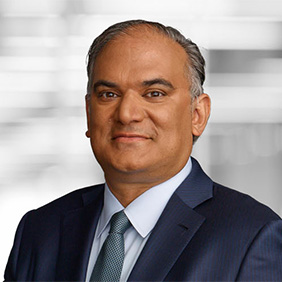
Andrew Sheets: Welcome to the inaugural episode of the Morgan Stanley Institute Roundtable, an ongoing series where we'll be taking deep dives into market topics that perhaps have no easy answer. I'm Andrew Sheetz, global head of fixed income research for Morgan Stanley, and today we're tackling AI disruption. What's fact, what's fiction and what actually matters for asset allocators across public and private markets?
Andrew Sheets: I've asked two of Morgan Stanley's leading voices to really dig into this with me. Lisa Shallet, chief investment officer of Morgan Stanley Wealth Management and chair of the Global Investment Committee, and Rui de Figueiredo, global head of investment and client solutions and CIO of the solutions and multi-asset group for Morgan Stanley Investment Management. Thanks to both of you.
Lisa Shalett: Thanks, Andrew. Great to be here with you.
Rui de Figueiredo: Thanks, Andrew. Also great to be here.
Andrew Sheets: So, to start, let's set the table. And Lisa, maybe I'll start with you. You know this question of AI disruption. It really feels like it's taking two forms at almost the same time. You know, in one sense, you have a market that's clearly worried about companies spending too much on an unproven technology. And then almost in the same breath, almost on the same days for markets, you have significant moves and disruption in the equity market as investors worry that this same technology is going to have hugely disruptive and transformative effects across major industries worth billions of dollars.
Andrew Sheets: So, you know, as you're as you're sitting there, Lisa, and thinking about this trend and thinking about these developments, where do you think we are really in the AI disruption debate?
Lisa Shalett: So for starters, Andrew, I, I would say everything that we're seeing on both dimensions, both the queries and the questioning about the spend, the acceleration in the spend, the return on investment of that spend, the time horizon when some of that spend may come to fruition are really is really a healthy question, as is the disruption question of where will this technology have its biggest impact, and where will business models that in many ways we thought were incredibly durable?
Lisa Shalett: Where are there threats to our assumptions? So, the first thing I'd say is I think that, you know, three years into this bull market around this theme, I see the market action and the fact that investors are asking these two questions as incredibly healthy and helpful. On the first question about, you know, the capex, I think the anxiety is well placed.
Lisa Shalett: And the reason that I say that is exactly to your point, we're seeing accelerating expectations of spend. In many cases, it feels like an arms race or a race to the end among incumbents who in many cases are coming to the gen AI battle from somewhat different, you know, starting points. And there seems to be an assumption that they can all win.
Lisa Shalett: And that that I think is always problematic. And it's always problematic when the dream and the animating visions that underpin the capex plans can't be kind of contained or concretized. Right. So, I think what we're seeing is something that is, you know, happening at the right time in this cycle, kind of three and a half years in. And it's been catalyzed by the news flow coming out of the companies themselves, which feels like it's got this competitive race element to it.
Lisa Shalett: On the software side, I think there in particular, you know, some of the things that we're seeing and some of the other fears that are hitting some of the other sectors that are going to be disrupted, that feels a little bit less rational. To me, that feels very sentiment driven and like, I didn't really think of that yet.
Lisa Shalett: And so to me, while I think we have to appreciate that many of the business models, particularly in software, were built on a very unique foundation over the last 15, 20, 25, 30 years, which is this idea that, you know, networking effects and platforms and zero marginal cost, you know, seat based revenue models that are recurring based on subscriptions could create these, you know, almost unassailable 55 to 65% gross margin businesses.
Lisa Shalett: I think that there's an element of people saying, oh my gosh, I never thought that things like software could be displaced or this magical, you know, zero marginal cost business model could be disrupted. But I think some of the other things that we're seeing in business services and financial services, commercial real estate and, you know, some of the health care services, a lot of that is somewhat premature.
Lisa Shalett: And I think it's a little bit of the baby in the bathwater and sentiment driven. So, I think that there's opportunities here both to manage risk among, you know, some of the infrastructure builders and be opportunistic and take advantage of some of the volatility with some of the supposedly disrupted who may actually end up being more entrenched and protected than we think.
Andrew Sheets: So, Lisa, let me just dig into that a little bit more around this question of kind of winners and losers from this. You know, I1I think this is something we've talked about, you know, many, many times in the past. You know, sometimes the winners of a new technology are not obvious or they're not necessarily the ones that that bring the technology.
Andrew Sheets: They're the ones that find ways to implement it more effectively. And to, you know, this has been, development. This has been a technology where the market's views around the winners have really shifted. You know, you've had periods where the market was really optimistic about banks being big beneficiaries of AI through more efficiency. And, you know, more recently we've seen more bank weakness on the back of some of these AI disruption fears software, which you just mentioned.
Andrew Sheets: Another great example, a sector where through some versions of this, it gains a lot of efficiency. And another version of this, it's disrupted, right? You know, I wonder if you could just dig in a little bit more to how you're thinking about, you know, where the, the winners and those who would be disadvantaged might be. And are there kind of underappreciated parts of this story that you think the market maybe hasn't really dug into or connected yet?
Lisa Shalett: Yeah. So I think below the sentiment, in in software in particular, you know, one of the things that we've been emphasizing quite a lot is to really take a step back and differentiate between those software business models that are deeply integrated into enterprise processes, meaning they are deeply integrated with companies data, or they're deeply integrated into managing a company's infrastructure, or they're deeply integrated into cyber security and things like that.
Lisa Shalett: Those are such critical path, trusted relationships that enterprises have made with their vendors that I think disrupting that simply because you can automate parts of the tasks that are carried out, I think is going to be proved to be much harder than many folks may think on first blush. Similarly, in areas like financial services or health care services, what you're talking about our businesses where there's lots of automation and routinized tasks, but where value gets added, continues to be entrusted relationships, right?
Lisa Shalett: Whether in financial services, it's a banker or an advisor with their client or in health care, you know, whether it's a patient relationship with a particular doctor or medical practice or medical institution. I think that those things, those relationships still matter. They're premised on trust. And while you can use tools to provide leverage, whether you're really going to disrupt that institutional trust that's based on relationships, I wonder if that some of that has not been overlooked.
Andrew Sheets: There's clearly been concern for some time now that that AI spending, which is been significant and is accelerating and is exceeding expectations, that this will be some form of a bubble, that this would, you know, be damaging to the market and qualify for that terrible B-word. And I guess, you know, because that words thrown around a lot, bubble's thrown around a lot.
Andrew Sheets: I'd just be curious to each of you, you know, how do you think about it? You know, where what do you think are the real characteristics of a bubble? And as you see this kind of debate raging, what are the things that you're trying to keep in mind, as is where we are in the cycle?
Rui de Figueiredo: You know, we have many conversations, a lot of them asking, is this 1995 or is it 1999? And so, when I sort of think about that, maybe I would answer that question two ways. One is, you know, when you think about the classical recipe for a bubble, it involves some combination of a new technology that captures the mind of investors, you know, ushering in a so-called new era, grabbing lots of media attention.
Rui de Figueiredo: We've got that, you know, a large deviation from trend and fundamentals, you know, usually incorporating some kind of dismissive attitude towards traditional valuation. We should talk a little bit about that. You know, retail participation, rapid price acceleration. And then something about leverage. Right. Amplifying the boom. And so, if you take those and you look at, you know, maybe you use that model 1995 versus 1999, you know, I think there's some similarities.
Rui de Figueiredo: And then there's some differences. I think, you know, when you look at what are the parallels, you know, that people point to equity market concentration, overall market valuation, surging Capex spend, which you referred to. Andrew, I think there's some reasons to think that we're you know, there's some differences. You know, market concentration is higher today than it was during the dotcom peak.
Rui de Figueiredo: Like if you look at the top ten names of the S&P 500, they're around maybe a little bit less than 40% of the index today. It was about 25% in 1999. But this is the difference here is that these companies are primarily, you know, so large due to the how they comprise a larger share of the index earnings.
Rui de Figueiredo: Right? The more profitable company is larger. It should be in the index on the valuation side, you know, S&P 500 is currently, you know, in between 21 and 22 times 12-month forward earnings. That compares to 25 times at the peak in 1999. And you know, today's multiples are also explained a little bit by a combination of sectoral shifts and interest rates, which are actually lower today than they were in that period.
Rui de Figueiredo: And then finally, you know, if you look at the Capex spend, which is starting to change a little bit, I think that one of the big differences between now and then was that a lot of the Capex was being funded by debt, and that has been mostly driven by, you know, cash flow and equity in this in the cycle.
Rui de Figueiredo: Now those things are starting to change. So, Andrew, you mentioned, you know, where would I start to get concerned? I think you could think about all of those elements. Right. You can think about, you know, more debt funding circular financing, valuations starting to shift. You know, especially for some private companies based on earnings to sort of other metrics.
Rui de Figueiredo: And that's where the concern is. But I don't think we're there yet.
Lisa Shalett: I think I would come at this question a little bit differently. I agree that we're not necessarily in a bubble from the perspective of valuation, and a lot of the volatility that we've seen in this cycle, I believe, is healthy and represents a learning a market that has actually did learn from 1999. But what is really interesting to me this time is, number one that we need to watch is number one.
Lisa Shalett: A lot of these companies now are very interconnected with each other because of their cross-equity investments in some of the quote unquote, circularity of the financing. So, we went from, you know, the initial 2 or 3 years of this being, you know, a set of parallel investments to a situation where a lot of these top ten names or now 15, are very integrated with each other, their fates are integrated with each other.
Lisa Shalett: And so, there's more systemic risk. The second thing is, is that when you think about this gen AI boom as a share of the economy, this has permeated far beyond tech. And so, the strengths that we are seeing in industrials, in energy, in construction, in commodities, in natural resources, it's all the same trade. And so not only intra but the tech ecosystem is there higher systemic risk.
Lisa Shalett: But within the market there seems to be a higher systemic risk because there's no other story. Somehow every sector's story is tied to the success or failure of gen AI. And then the last piece of this, and the piece that I think is really interesting is the consumer. And where does the consumer fit in this? Well, we're living in an era of a k-shaped economy where the market and the success of the market is driving consumption, because it's that top 20% of wealth and income owners who are exposed to the markets are driving consumption.
Lisa Shalett: And so, the question is, if markets falter, not only do you have a potential for a bear market where everything goes down because it's all linked to this same trade, but does your economy go down right? Is it not just a market crash, but it's an economic one because your consumption, which has kind of been lackluster X your, you know, most affluent cohorts driving demand, you know, is it all the same trade and an unwind is going to be particularly ugly.
Lisa Shalett: So, to me it's less about the bubble and it's more about when and if this thing corrects or breaks. Could its reverberations be far and wider than you know? The ten companies?
Andrew Sheets: So, I'd love to actually now kind of take that and move this into the actual kind of investing implications. I mean, both of you are working closely with investors who are having to put, you know, money to work in this market. And, you know, it's a market where you can't really avoid the eye story. You know, as you mentioned, it's a huge part of market cap.
Andrew Sheets: It's a huge part of earnings. It's a huge part of the economy. And so, you know, I guess my question would be at both the micro level, you know, which is about stock characteristics, company characteristics that are more attractive in this environment. And then it kind of the portfolio level, you know, how does this kind of dominant eye narrative impact how you're thinking about sectors, styles, even regional kind of debates around, you know, kind of how investors should be should be navigating this, this market, this very kind of concentrated market.
Rui de Figueiredo: You know, I completely agree with Lisa, by the way. You have to look across your whole portfolio about, you know, just like she was saying about you have to look across the whole economy to think about where are sort of both risks and opportunities, because it's not just in one part of your portfolio. It's basically everywhere in different forms.
Rui de Figueiredo: But, you know, maybe, maybe what I'll do is just talk a little bit about like, sort of how we're thinking about the equity complex. And I, I think, you know, if you think about sort of how the effects of AI propagate through the economy over time and maybe across, you know, sectors, you know, really where we started, you know, wave one was really about infrastructure, semiconductors, electricity, data centers, you know, surges in capex, spending, valuations and so on in those spaces.
Rui de Figueiredo: In the next stage, you basically get to, you know, we're starting to see now is essentially, in our view, kind of a branching, between, say, digital adopters, things like platform software and services and what we call physical adopters, humanoids, autonomous vehicles, Internet of things and so on. Wave three, you know, would be applications, biotech, gaming, education, transport.
Rui de Figueiredo: And I think that the way that investors should think about approaching, you know, different levels of sort of investment implementation, there's the macro that Lisa was just talking about. You could think about sector levels. You could think about individual companies. You have to think carefully about what are the characteristics of these various formats for adoption in terms of their sort of exposure to AI and how that will interact.
Rui de Figueiredo: So let me give you some examples. So, on wave two physical adopters, digital adopters. You know, in the physical adopter space, those are areas where there are high industry barriers to entry. There's significant competitive moats, whether you look at supply chain complexity or capital costs, regulatory barriers, government contracting. Whereas in the digital space. And this is part of the narrative, I think, around software is, you know, there's the potential for more disruption.
Rui de Figueiredo: Why? Because, you know, the types of barriers and or the existence of barriers might be more under attack. And so, our view is that the implications you basically have to ask your two questions as you think about sort of that competitive environment, when you go sector by sector or even company by company. Number one is do these companies have moats or do these sectors have modes?
Rui de Figueiredo: And what kinds of moats are the most secure in? The second one is how do you play things? Given the answer to the first, you know, how do you invest behind those? If you have greater or weaker survivability or, you know, competitive advantages? And you know, our view is, is that, you know, in certain areas, like for example, those physical adopters where we see, you know, defensible moats, it's likely that incumbents, you know, they might reshuffle, but incumbents are likely to be the ones that persist.
Rui de Figueiredo: So, you know, in those areas you can play these more thematically rather than security by security. So things like defense, humanoids, health care, things that Lisa was referring to would be things where you could play the sector, you know, effectively, thematically, whereas on the digital side, where you're much less confident that I will not disrupt. That's where individual company moats matter a lot, and you'll see lots of dispersion.
Rui de Figueiredo: And so there you have to do the hard work to figure out who wins and who's going to lose more of a security selection argument. And even those winners could be in the private space right now. They could be, you know, not in the public space. So that's the way that we've been trying to think about the portfolio structure around the equity side.
Lisa Shalett: But as we know, increasingly this is about how is this capex cycle being financed. And which brings us to the fixed income markets. And of course, you know, back to you, Andrew. And so, you know, I think one of the conundrums that you know, investors have right now is how to think about their fixed income investments as it relates to AI.
Lisa Shalett: How should I think about the potential issuance that may hit the markets both in a public and a private way? And then secondly, I would put to you the question that obviously is of the moment, which is as private equity and private credit carried with it, exposure to, you know, companies and assets that could be disrupted. From prior vintages.
Lisa Shalett: And how are we thinking about that in the portfolio? Both the opportunities and the risks.
Andrew Sheets: Yeah. So, gosh, a lot of, I think really kind of fascinating things to unpack. And as you both have mentioned, you know, this really is not exaggeration to say there's a really global cross asset story. As you mentioned, it touches a lot of equity sectors. It touches a lot of regions. You mentioned emerging markets. It touches commodities.
Andrew Sheets: It certainly touches fixed income, and it touches private assets. So let me kind of try to dig into both of those in turn. You know, if I start with the credit market, I and I say this with all earnestness, I mean, I think this is a classic case of, you know, kind of be careful what you wish for or the challenges of your wishes being granted.
Andrew Sheets: You know, the credit market historically had very little technology, debt. It's a credit market that is over indexed relative to the equity market, to financials, which have a very heavy weight to utilities, to telecom. Those are sectors that credit investors have lots of exposure to have long had a lot of exposure to. And, you know, I think for a long time, if you asked credit investors what they wanted, they would say, look, we would love a more exposure to a sector that we don't have a lot of exposure to.
Andrew Sheets: That is a secular winner, that that is uncorrelated to some of these other sectors, that it doesn't have a lot of leverage. That is, high rated technology ticks a lot of those boxes, right. The tech sector has been rapidly growing. It has good margins and is a strong competitive position. And these balance sheets are often carrying very, very little debt with very high ratings.
Andrew Sheets: You know, when we talk about the largest tech companies that that are in the S&P, they are largely rated, you know, double or 888. You know, some of the highest ratings in the credit market. So, these are now exactly the companies that are coming to the market and coming to the market in a very big way, as they have very large capital expenditure needs that need financing.
Andrew Sheets: And, you know, they can finance parts of this a, you know, maybe half of it with cash flow, but that still leaves a lot of other financing that's needed. And the investment grade market is there. So, you know, again, I think this is something where it's first, I think going to be with us for a while. There's a lot of spending; there's a lot of financing that needs to be done.
Andrew Sheets: This is going to be a multiyear story and credit of how this financing is provided. And we expect a lot of issuance, not just this year, but next year and probably the year after that. This is a multiyear trend. Secondly, is that this is, you know, giving investors an opportunity to pick up higher rated debt at similar spreads as lower rated debt.
Andrew Sheets: But it can also reprice the broader market, because if a double A rated tech company is coming to market and issuing the same spread, the same, you know, issuing at the same yield all in as, as a single a, or, a high triple B rated credit. Well, that can reprice those other markets. So, we are thinking that this does have a modestly negative repricing effect that investment grade spreads in the US go 10 to 15 basis points wider over the course of this year as it now.
Andrew Sheets: Is it worrisome? I would say at the moment not yet. I think what I would look for as a worrisome sign is this issuance driving a downgrade? Is it driving you to a deterioration of the balance sheet to a meaningful degree, to the degree where a rating agency says we're changing our credit assessment? We have not seen that yet.
Andrew Sheets: And these companies, because the starting point for their balance sheets is so good, often have a lot of debt capacity. Our credit strategy team is has estimated that, you know, for the largest tech companies in the US, if you kind of word, you know, perfectly shift the debt around, they could issue an extra $700 billion of debt with a B without triggering a single notch of downgrade, which is which is a pretty impressive feat.
Andrew Sheets: But speaks to their debt capacity again, I think, you know, when we going back again kind of connecting back to our signposts of things getting more speculative, a more worrisome that would be these issuers issuing even more aggressively and continuing to issue, even if it meant more significant ratings actions from negative ratings, actions from the rating agencies.
Andrew Sheets: Now, that takes us to the second question. This question around private credit and private assets. And again, this is fascinating because these are investments. These are alternatives are a place that investors often turn to. It seems, for diversification to kind of get away from some of the stories in public markets. And yet, Lisa, going back to your overarching point, you know, this is a story that seems to cut across everything, including private markets.
Andrew Sheets: And the reason is that software and technology is the single biggest sector of the private credit market. And the reason for that is that it's one of the biggest sectors of the private equity market. The private equity sponsors and private credit is often providing financing to a private equity deal, to a leveraged buyout from a private equity firm.
Andrew Sheets: That private equity looked at technology, often looked at software and said, this is an attractive business to add debt to. These businesses have high margins. They have a lot of stability. They are kind of relied upon incumbent providers to key industries. This is a good, high-quality business to buy, and it's a good, high-quality business to add some debt to.
Andrew Sheets: And that's created two challenges. It's, you know, created the challenge that we're seeing for all public software companies where the market's clearly worried about disruption. And then it's particularly challenging because the software companies in question and private markets, they're carrying a lot more debt on their balance sheet as a function of these buyouts. So, this is going to be something that takes some time.
Andrew Sheets: These are markets that are somewhat more opaque. We don't have as much financial information on the operating metrics of these companies. And so it's going to take some time, I think, for the market to, to get comfortable or to really understand where these challenges lie, especially in such a large sector. And maybe I'd close with there's, there's, I think a little bit of, an irony here or something that expresses the importance of details.
Andrew Sheets: I think going back to 2025, there was a lot of concern around Liberation Day, around the tariffs, that that that would be bad for private credit because, you know, that would affect, you know, the retail sector in manufacturing. And yet retail is a very small part of private credit. There just really isn't that much lending to it because it was never as much of a private equity heavy sector.
Andrew Sheets: But software was large. Software was a very large sector. And as the market attention has turned to it, that's become more relevant. So certainly I think another example of just how many parts of the market this AI story cuts across.
Lisa Shalett: What I think is fascinating is, you know, because AI is so pervasive right now. Right. The portfolio construction challenge is not just how do I invest public versus private, but do I own the equity versus the bond? Right. Would I rather own, you know, alphabet equity or alphabet debt? And then finally, is this only a US story? Right.
Lisa Shalett: I think the last 15 years of American exceptionalism has, you know, really, you know, inculcated investors with this idea that innovation of any note and technology dominance of any note is inherently American and US biased and U.S. centric. And yet there are elements of this story that I think may surprise people. And the deep seek moment, you know, roughly a year ago was one of those wake up calls.
Lisa Shalett: But I have a sense that there may be more I don't know what you gentlemen thank, but while you know, it may at the minute seem that large language model innovation, you know, has is seeing the leading bleeding edge come from, you know, American innovators. You know, what about embodied AI in in robotics and autonomous vehicles and electric vehicles.
Lisa Shalett: And you know, things of that nature where, you know, potentially producers in in China do dominate. So maybe, you know, they aren't the large language model winners, but perhaps in terms of actual embodied AI, in terms of robotics, humanoids, EVs, autonomous space, maybe they are the application winners.
Rui de Figueiredo: There's another point about this, which I think, Lisa, it fully follows on what you were just saying, which is, you know, maybe even just thinking about who wins in that first layer, the infrastructure layer, the development of models and so on could be one answer. Maybe it is the U.S. and China and a few concentrated countries, but when you go to the propagation through the economy, you know, one of the questions that you have to ask yourself is, you know, if we're going to see massive productivity effects in every you know, sort of pocket of the economy, maybe not in the same way, who's going to benefit more from that?
Rui de Figueiredo: You know, it's going to depend on also the baseline, you know, the US might be more productive as a starting point. And so, the ability to add, you know, productivity gains from the dispersion of AI from as it moves through the economy might be higher in other places that are actually starting from lower base effects with higher, you know, marginal effects.
Rui de Figueiredo: And so that's one of the things we've been thinking about when you sort of think about sort of what's going to happen not just next year, but over the next several years as AI propagates through the economy and even maybe has some of the positive productivity impacts that the people are seeing.
Andrew Sheets: So that's actually, I think, a really kind of fascinating theme that then maybe we close on is, you know, a question to both of you is what should a multi investor be thinking about today if, if I disruption is real. But the timing is ultimately quite uncertain. And if I could just, you know, make another plug for the fixed income world or some of the challenges that that we're facing with this.
Andrew Sheets: So, you know, maybe Lisa I'll, I'll throw this to you first. But how do you think ultimately about multi-asset investing in this uncertain timing dynamic?
Lisa Shalett: I mean, I think just if I could put it in one word, it's unfortunately it's diversification. And I know that may sound tired, but when we think about how pervasive the exposures are, how big the impacts are across not just the markets, but actual real economies in the global economy and our inability to envision fully winners and losers.
Lisa Shalett: Right. This idea of building a diversified multi-asset class portfolio that takes lots of different approaches, that says, maybe if the best returns are going to be by me holding the debt rather than holding the equity, maybe the best thing is to is to play this in private markets in addition to public markets. Maybe the best thing for me to do is play this both, you know, in the US and outside the US, and to do that in a way where you're mindful of both how pervasive the theme is in the portfolio and where, you know, to whatever extent you can have some natural and genuine hedges in that portfolio.
Rui de Figueiredo: I completely agree with Lisa. I think that the number one sort of approach is, you know, because of the uncertainty, you want to be diversified in all kinds of different dimensions. The only other thing I would add to that is to say you know, potentially, given all of what we've talked about over the last, you know, 45 minutes, the need to be active is another dimension that might be more prevalent in the go forward than it has been, you know, over the last several years.
Rui de Figueiredo: You know, if you look back, you know, last three years, even if you look back over longer time horizons, you know, the playing the effectively the beta has actually been in a diversified way has actually been the best mode. But I think because of these, you know, what could be discontinuous shocks could be, you know, significant amount of dispersion even within, you know, countries, within sectors, within, you know, subsectors being able to also be flexible with respect to how you're allocating, being potentially more active, like Lisa was saying, when, you know, is it better to play the debt than the equity side of it, of a specific idea will serve investors really well?
Andrew Sheets: I want to thank you both for answering the hard questions. I didn't want to go too easy on you here. And so thank you.
Lisa Shalett: Absolutely, Andrew, thank you for hosting us and for including us as always.
Rui de Figueiredo: Thanks very much, Andrew.
Andrew Sheets: And thank you for listening to our inaugural Morgan Stanley Institute Roundtable. If you are not already a subscriber to our new Morgan Stanley Institute newsletter, head over to Morgan stanley.com Backslash Institute for all our latest news and insights.
Voiceover
This material is solely for informational purposes, and is not a Research Report as defined under FINRA regulations. Morgan Stanley does not undertake to update this material and the conclusions discussed may change without notice. Morgan Stanley shall not in any way be liable for claims relating to this material and makes no express or implied representations or warranties as to its accuracy or completeness or for statements or errors contained in, or omissions from, them.